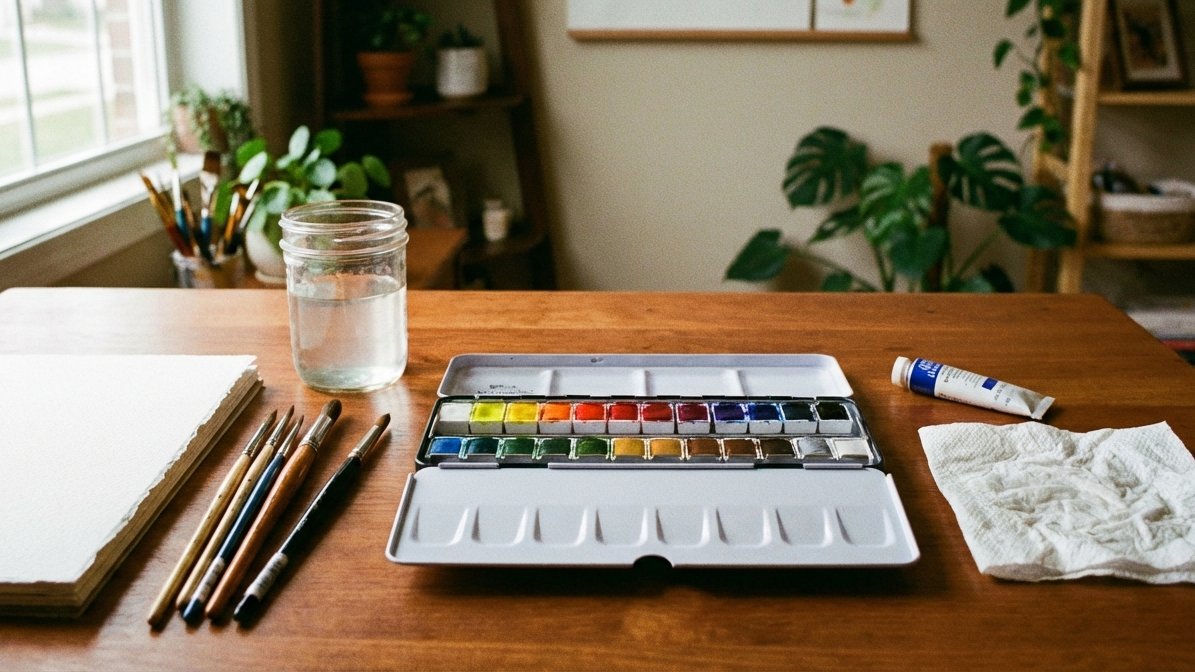
Every great artist began with a first brushstroke. To start watercolor painting, you need just 5 materials and 3 techniques — not talent, only courage.
Why is watercolor painting a perfect starting point?
To start watercolor painting, you don't need art education, expensive materials, or "talent." All you need is: 5 basic materials, a few fundamental techniques, and the courage to start painting.
Watercolor is one of the easiest art forms to learn compared to other techniques. It doesn't have the long drying times of oil painting; it doesn't require layered mixing like acrylics. Just water and paint — and that quiet, peaceful moment when the two come together on paper. Moreover, a small corner of a table, a few brushes, and a block of paper are enough; you don't need a large studio or a special room.
Maybe you've been saying "I'll start someday" for years. Maybe you think your hands will tremble, that the result won't be beautiful. The vast majority of Şirvan Hoca's students come to their first lesson with exactly this feeling — saying, "I can't do it at all." But at the end of the first lesson, they leave with a small but real watercolor artwork of their own. This guide was prepared to help you take that first step.
The Right Materials to Get Started
Starting with the right materials makes your watercolor journey much more enjoyable — but that doesn't mean "the most expensive." Below you'll find budget-friendly, high-quality options for beginners.
The 3 Essential Techniques You Need to Learn First
There are hundreds of techniques in watercolor — but they all boil down to three. Once you learn these three, you can learn everything. And none of them are as difficult as you might think.
1. Flat Wash
This involves applying color smoothly and evenly to a large area. Wet your brush with plenty of water, open the paint on the palette, and tilt the paper slightly. Go from top to bottom in parallel horizontal lines — don't rush, feel the rhythm. It's indispensable for skies, seas, and large backgrounds; you'll definitely use it in your first work.
2. Wet-on-Wet
First wet the paper with clean water, then apply paint with your wet brush. The paint traces its own path on the paper — creating organic, soft, unexpected transitions. You might think you can't control it, but the beauty of this technique lies in that moment of "freedom." Ideal for clouds, fog, and soft backgrounds; and once you try it, it can become your favorite technique.
3. Dry Brush
Keep very little water on your brush — almost dry. A quick, light tap on the paper leaves cracked, textured marks. Tree bark, rock surfaces, wave foam, dry grass — it's perfect for reflecting the rough textures of nature. When combined with the other two techniques, it adds depth and character to your work.
Your First Project: A Simple Sky Gradient
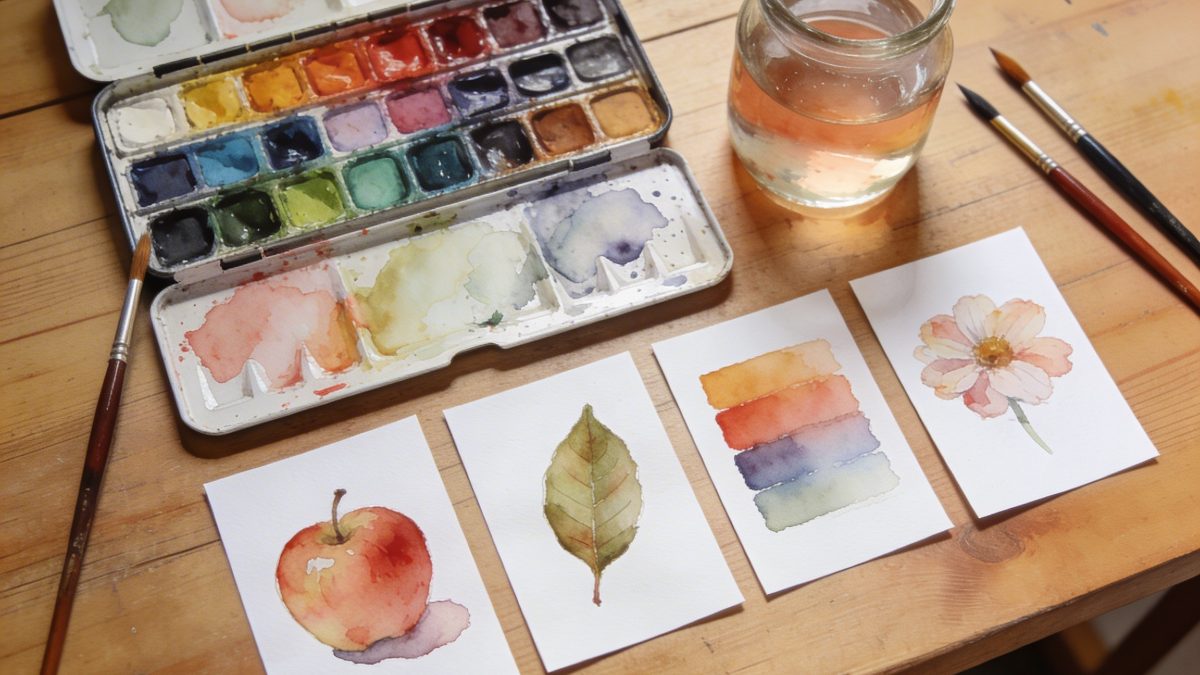
For your first project, the best choice is a simple sky gradient. One color, one stroke — but this little exercise teaches you the flat wash technique, lets you feel how water behaves on paper, and ultimately produces something truly beautiful. Ready? Let's begin:
1. Hold your paper horizontally, raising the bottom edge slightly — so the paint can flow from top to bottom.
2. Mix cobalt blue with plenty of water on your palette. The mixture should look light, like tea color — when you dip your brush, the tip should turn a translucent blue.
3. Start at the top. Slowly work your way down in horizontal, calm lines. Don't rush — allow each line to merge with the previous one.
4. As you go down, add less paint and more water to your brush. The color will gradually lighten, almost turning white. That's it — that's exactly how you achieve the gradient effect.
5. Put down your brush. Absolutely do not touch it until it is dry — wait at least 15 minutes. This waiting period is also part of painting; learning to trust the water and the color.
Once dry, what you'll see before you will be your first watercolor painting. Small but real.
5 Common Beginner Mistakes (and How to Fix Them)
In watercolor, there's no such thing as "wrong"—but some mistakes slow down progress. These 5 are common to almost everyone; knowing them beforehand makes the process much easier.
1. Using thin paper
Paper under 200g will wrinkle when it absorbs water, the paint won't spread evenly, and the brush will snag. Use a minimum of 300g Cold Press paper for watercolor—this single change will dramatically improve your results.
2. Leaving too little water on the brush
Watercolor is called that—water is half the battle. If the brush is dry, the paint won't flow, and the lines will look harsh and forced. Thoroughly wet your brush before each application; the mixture should be fluid, almost watery.
3. Going over it while it's wet
If you add paint to a layer that hasn't dried yet, the colors will blend unintentionally, creating smudges. Patience is a technique in watercolor—move on to the next layer only when each layer is completely dry.
4. Over-brushing
In watercolor, the brush carries the paint, not you. Going over the same area repeatedly will fade the color, damage the paper, and destroy that fresh, vibrant look. Don't go over one area more than 2-3 times — put your hands down.
5. Expecting perfection from the first attempt
The first 10, even 20 attempts are a learning process. Each watercolor attempt leaves behind a lesson that allows you to do the next one better. For years, the following sentence echoed in Şirvan Hoca's workshop: there is no bad work, only learned work.
The actual text will be added here when Şirvan Hoca's notes arrive — for now, placeholder.
"You don't have to paint perfectly the first time you pick up a brush. You just need to start — the rest will come naturally."
Frequently Asked Questions About Watercolor Painting
How long does it take to learn watercolor?
4-6 weeks of regular practice is enough to learn the basic techniques. A student who practices 2-3 hours a week will be able to comfortably apply flat wash, wet-on-wet, and dry brush techniques by the end of the first month. Mastery, however, is a lifelong and enjoyable journey.
How many brushes can you start with?
You can start with just 2 brushes: No. 6 and No. 10 round brushes. These two brushes cover everything from fine details to broad washes. You can grow your collection over time.
What paper should be used?
For beginners, 300g Cold Press paper is ideal. Its surface is neither too smooth nor too rough — it adapts to every technique. Buying it in block format prevents the paper from curling.
Why do watercolors come out blurry and muddy?
The most common reason is mixing too many colors on the palette. When you go beyond two or three colors, the colors become muddy. Also, using dirty water dulls the colors — change your water container frequently.
What is the difference between watercolor and acrylic?
Watercolor is water-based and transparent; Mistakes cannot be corrected, but that transparency creates a unique light effect. Acrylic, on the other hand, is opaque and covers imperfections; you can paint over them. Watercolor offers a more spontaneous and meditative experience, while acrylic requires more control.
The title of the "Courses" section will be written here.
Start your watercolor journey today.
The right time to make your first brushstroke is always now. Under the guidance of Şirvan Hoca, at your own pace, whenever you want.