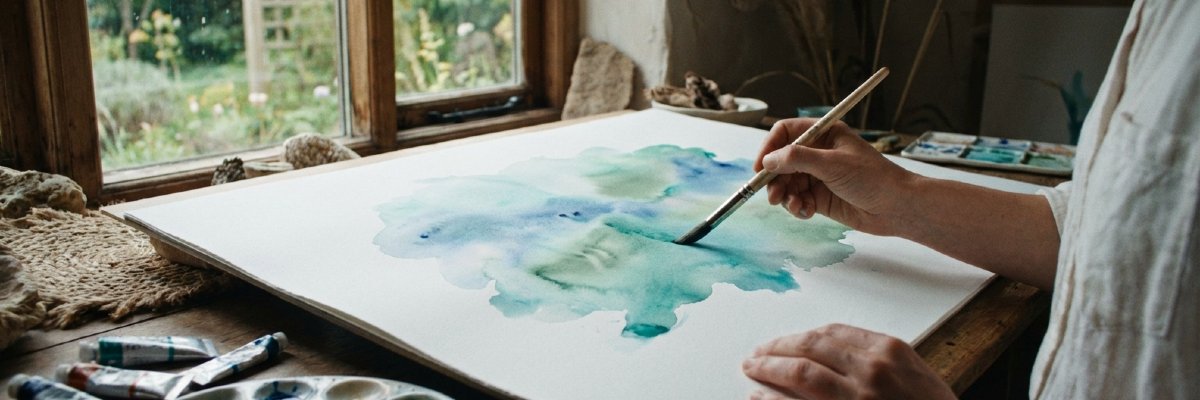
Holding a brush is meditation. Watercolor painting reduces stress, calms the mind, and unlocks creativity — science says so too.
Why is art relaxing? What does science say?
The vast majority of students who begin watercolor painting say the same thing after their first lesson: "Hours have passed, I didn't even realize." This feeling is no accident — there's a concrete biology behind it. Research shows that focusing on a creative activity significantly lowers cortisol levels — the stress hormone. It also releases dopamine — that small but real satisfaction of "I created something." The hand movements, the color choices, and watching the water spread across the paper focus the mind on a single point for that moment — the past and future disappear, only the present remains. This aligns with the definition of meditation: non-judgmental, focused awareness. Watercolor is a tool for meditation — and you don't need to know how to hold a brush.
What is Mindful Painting?
Chapter 2 — text
Title: What is Mindful Painting?
Mindful painting — painting with awareness — is a practice that has spread rapidly worldwide in recent years. But it is actually a new name for something that has existed for centuries: creating completely in the present moment, without judgment and without being fixated on the outcome.
The difference from ordinary painting is this: in ordinary painting, the goal is to achieve a beautiful result. In mindful painting, the goal is the process itself. The feeling of the brush touching the paper, watching the water spread, waiting for the colors to blend — each of these is a moment of awareness.
Watercolor is the perfect tool for this practice. Because watercolor teaches you to let go of control — to trust the water and the paint, to accept that not everything will go as planned. And it is precisely at that moment of acceptance that the noise in the mind decreases, a door to tranquility opens. This feeling is very familiar in Şirvan Hoca's classes. Students come to class tense, tired, or anxious — and leave as different people when they put down their brushes. Watercolor opens that door.
3 Easy Meditation Exercises with Watercolor
Section 3 — text
Title: 3 Easy Meditation Exercises with Watercolor
You don't need any special skills for these three exercises. All you need is a brush, some paint, a piece of paper, and a few minutes of silence.
Exercise 1: Color Washing
Dilate a color you like on your palette with plenty of water. Wet the paper. Dip your brush in the paint and let it fall on the paper — don't direct it, just watch. Wherever the color goes. Silence the voice in your mind and focus only on the movement of the color. This exercise takes 5 minutes and its effect is felt for hours. Exercise 2: Free Flow
Without drawing anything, without planning anything, just move the brush across the paper. Mix colors, create shapes, erase, add on top. The result doesn't matter — the process matters. This exercise removes inner censorship and opens up creativity. You will remember the feelings you had when painting as a child. Exercise 3: Nature Observation
Go outside or sit by a window. Carefully observe something in front of you — a leaf, a cloud, a flower. Notice the colors, the light, the shadow. Then try to interpret it with watercolors — not like a photograph, but as you feel it. This exercise improves both observational skills and artistic expression.
Don't think while you paint, feel it.
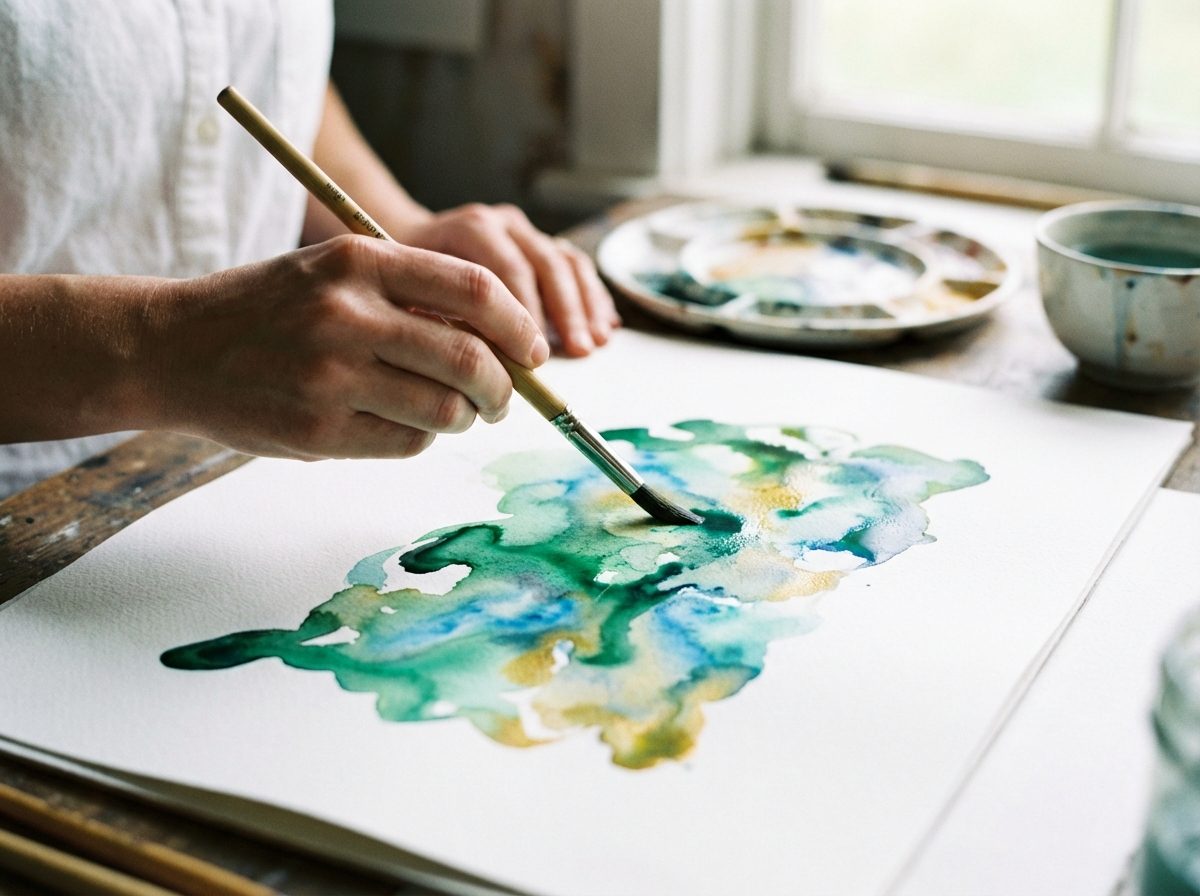
In watercolor painting, the biggest obstacle is often not the brush, but the mind. "I'm doing it wrong," "it's not turning out well," "I'm incompetent"—these voices stop the brush before it even touches the paper. The most important advice Şirvan Hoca gives her students in her workshop is this: stop analyzing while you paint. Feel the color. Watch the flow of the water. Experience the moment the brush touches the paper. The result comes naturally—but only when the mind is quiet. The way to achieve this quietness is through repetition. A few minutes each day, painting without judgment or conclusions—over time, that inner voice will fade. Something else will take its place: a state of flow. That state that psychologists call "flow"—timelessness, focus, and deep satisfaction. Watercolor is one of the shortest paths to that state of flow. Because the water already flows—you simply accompany it.
How Can 15 Minutes of Daily Art Practice Change Your Life?
Big changes don't come in big steps — they come with small, consistent habits. 15 minutes of watercolor practice a day sounds modest. But when you look back a month later, you'll see the difference very clearly.
First week: Picking up the brush feels strange. The results aren't what you expected. But you sit down again every day — because those 15 minutes feel different from the rest of the day.
Second week: Water control begins to improve. Colors come out cleaner. The mind calms down faster in those 15 minutes — it learns to go where it needs to go.
Third and fourth week: It becomes a practice routine. You start looking forward to those 15 minutes to start or end your day. Holding the brush after a stressful day becomes a necessity.
A month later: When you look at your work, you see the progress concretely. But more importantly, you feel something changing inside you — more patient, more observant, more present.
This is what Şirvan Hoca tells every new student: don't set big goals. Just pick up the brush every day. The rest will come naturally.
From Şirvan Hoca
"The moment you pick up the brush, the noise of the world stops. There's just water, paint, and that silent, white paper. That's all — and sometimes that's all it takes."
Start your art practice today.
Start your art practice with daily inspiration cards.
365 inspiration cards a day — meditation, mindfulness, and art all in one. Now's the perfect time to make a small but powerful start to your watercolor practice.