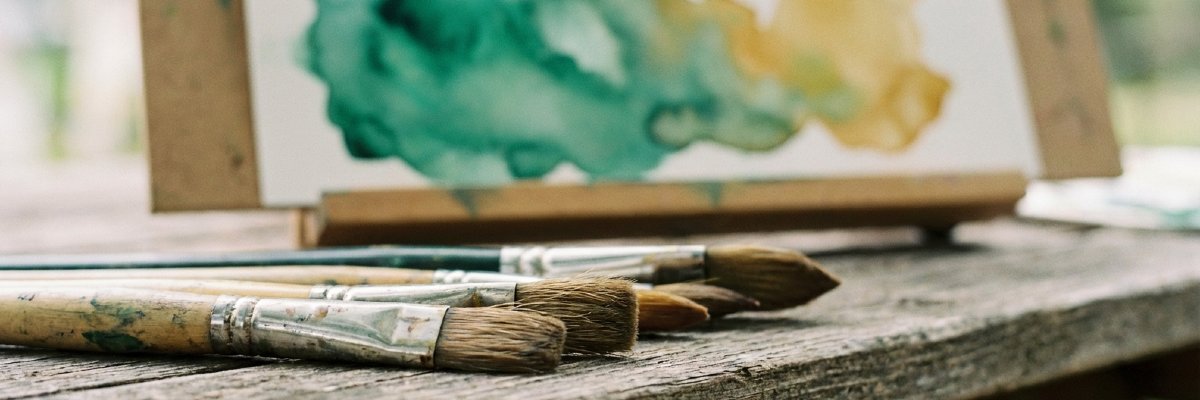
Starting with the right materials makes your watercolor journey easier. A comprehensive guide to help you choose brushes, paints, paper, and auxiliary materials according to your budget.
Why is the Right Material So Important?
One of the most common mistakes when starting to learn watercolor is either buying very cheap materials or, conversely, thinking that everything needs to be "the best" before you begin. Both slow you down. Very cheap materials—especially thin paper and low-pigment paints—make learning the technique difficult. The results aren't what you expect, and you can't tell if the problem is with the materials or the technique. However, the right starter kit is both budget-friendly and provides a true watercolor experience. For years, Şirvan Hoca observed in her workshop that students who start with the right materials feel progress from the very first lesson. This guide is designed to help you find exactly that "right starter" kit—nothing more, nothing less.
Brush Selection: Everything is Possible with 4 Brushes
The good news about brushes is: you don't need a cupboard full of brushes to get started. The system that Şirvan Hoca has recommended to his students for years is extremely simple — 4 round brushes and 1 fine contour brush. These 5 brushes will cover everything you need during the first year.
Round Brush Set — Your Basic Choice
The round brush is indispensable for watercolorists. Its tip gets into fine detail lines while its body easily paints large areas. Şirvan Hoca recommends 4 different sizes for beginners: small, medium-small, medium-large, and large. These four sizes cover every scale from fine work to broad washes and complement each other. Contour Brush — For Fine Details
This brush with a very fine tip is used for branches, veins, fine lines, and contour lines. It gets into fine details that the round brush cannot. Although it is used infrequently at the beginning, it becomes indispensable as you progress.
Synthetic or Natural Bristle?
Natural bristle brushes are superior in terms of water retention capacity but are expensive. For beginners, high-quality synthetic brushes are an excellent choice — they are both affordable and, thanks to modern production technologies, deliver performance close to natural bristles. Şirvan Hoca initially prefers economical but high-quality synthetic series; she reminds all her students that choosing a good brush doesn't have to be expensive. Brush Care
A well-cared-for brush can last for years. Wash it with lukewarm water after each use, and dry it while maintaining its shape. Never leave brushes in a cup with the tip facing down — the tip will lose its shape and may not recover.
Paint Selection: Which Series Should You Buy?
Watercolor paints are divided into two main categories. The student series is affordable and suitable for beginners, while the professional series is ideal for advanced users with its high pigment density and color fastness. Student Series:
Medium pigment density, good color fastness, affordable price. More than sufficient for learning techniques. Professional Series:
High pigment density, excellent color fastness, high transparency. For advanced users and professionals.
For beginners, Şirvan Hoca recommends 4 series:
Winsor & Newton Cotman — the most widely available series with a strong price/quality balance.
Van Gogh — a reliable series that stands out with its vibrant colors and wide palette options.
Daler Rowney Aquafine — an economical but high-quality series, ideal for beginners.
St. Petersburg White Nights — the series that comes closest to professional quality at a cost close to student prices. A valuable option for those who can stretch their budget a little. When to switch to the professional series?
Switching to the Daniel Smith, Schmincke, or Winsor & Newton Professional series becomes meaningful when you can comfortably mix colors, layer, and control water.
Are 12 colors enough? Yes — even more than enough. Six basic colors are enough to start with: yellow, red, blue, brown, green, and black. You can expand the palette as you learn color mixing.
The Most Overlooked Yet Most Critical Material
In watercolor painting, paper is no less important than paint. In fact, many experienced artists say that paper is even more crucial than paint. Thin, low-grammage paper ripples when it absorbs water, brushes get stuck, and the paint doesn't spread evenly — this is a problem created by the material, not the technique.
Gramage: 300g Requirement
Choose a minimum of 300g (140 lb) for watercolor paper. Papers of 200g and below swell when wet, making it difficult to work with. 300g paper supports the weight of the water and stays flat.
Correct Size for Beginners: Around A4
Professor Şirvan does not recommend that beginners start with large paper. Sizes close to A4, such as 18×25 cm or 24×32 cm, teach mastery of small areas — brush control, water balance, and composition are much easier to grasp at this scale. Switching to larger paper comes naturally after the basic techniques are established. Paper Selection for Beginners
Professor Şirvan prefers economical but reliable papers in the learning process. Series like Canson Montval are ideal for this stage — they are both affordable and offer sufficient quality to learn watercolor techniques. Experimentation is possible without the pressure of using expensive paper, and learning can come from mistakes. For Advanced Level: 100% Cotton Paper
When the technique reaches a certain level of maturity, switching to 100% cotton paper makes a big difference. Cotton paper absorbs water much more evenly, keeps colors more vibrant, and retains its shape even when wet. Arches is one of the most reliable names in this category. Şirvan Hoca directs his advanced students to these papers — because at that point, the difference in paper becomes noticeable. Surface Texture: Three Options
Cold Press: With its slightly textured surface, it is the most commonly used type of paper. It adapts to every technique and is the first choice for beginners.
Hot Press: With its completely smooth surface, it is ideal for detail work and illustration. It is more suitable for advanced levels.
Rough: With its distinct texture, it is used for expressive, freehand work. It creates magnificent textures in dry brush technique.
Block or Sheet?
For beginners, a watercolor paper block is recommended. The block paper, with all edges glued, won't curl when wet and will remain stable during painting. If using a single sheet, tape the paper to a wooden or stretch frame before you begin.
Other Auxiliary Materials
Besides the trio of brushes, paints, and paper, a few more small supplies complete your watercolor experience. You may not even need to buy anything new for most of them. Palette
Used for opening and mixing paints. A plastic palette with a lid prevents paints from drying out and allows you to use leftover paints for the next project. A white porcelain palette shows the true tone of the colors more clearly — professionals often prefer this.
Water Container — Two
Always have two containers: one for washing the brushes and one for holding clean water. This small detail dramatically improves color cleanliness. You don't have to buy anything new — an old jar or glass from the kitchen will work perfectly.
Paper Tape
If you are using a single sheet of paper, paper tape is essential for taping the paper to a wooden or hard surface. It prevents the paper from curling and provides a smooth working surface.
Pencil and Kneaded Eraser
A fine-tipped pencil is sufficient for sketching a light composition before painting with watercolors. A kneaded eraser cleans line marks without ruining the paint — a regular eraser can damage the paper surface. Paper Towels or Napkins
Keep them handy in every project to absorb excess water from the brush and correct colors. Practical and economical — even kitchen paper will do the job. Masking Fluid
Used to protect specific areas of the paper from paint. Not essential initially — can be preferred after you've progressed and become familiar with the technique. Becomes indispensable for white flower petals, bright light points, and fine details.
Recommended Ingredients for Getting Started
We've compiled all the materials that Şirvan Hoca recommends for beginners on a single page. You can browse them here instead of searching for them individually.
Frequently Asked Questions About Watercolor Supplies
Is the cheapest watercolor set sufficient?
School-type sets made for children are not sufficient for learning watercolors. The paints in these sets are low-pigmented and opaque — they do not give the transparent, luminous effect characteristic of watercolor. Beginner-level professional sets such as Winsor & Newton Cotman, Van Gogh, Daler Rowney Aquafine, or St. Petersburg White Nights are affordable and provide a true watercolor experience.
How many brushes should I start with?
It is sufficient to start with 4 round brushes and 1 fine contour brush. These 5 brushes cover every scale from fine details to broad washes. You can expand your collection as your technique progresses.
How often should I change my brushes?
A quality brush can last for years with good care. Wash it with warm water after each use, dry it while maintaining its shape, and never leave it in the cup with the tip facing down. When the tip is deformed, it's time to replace it.
Are watercolors and watercolors the same thing? No. Watercolor sets used in schools are opaque and chalky — they do not give a watercolor effect. True watercolors are made of transparent pigments and use the whiteness of the paper as a light source. This difference completely changes both the visual result and the learning experience.
Should I buy large paper at first?
No — quite the opposite. Professor Şirvan recommends that beginners start with sizes close to A4. A small area makes it much easier to grasp brush control, water balance, and composition. Switching to large paper comes after the basic techniques are mastered.
Should I buy masking fluid right away? Not necessarily at first. Focus on the basic techniques first, and try masking fluid when you're a little more advanced. At that point, you'll understand what it does much better and use it more efficiently.
Courses You Can Start With These Materials
Choose your materials, start painting!
You don't have to search for the materials recommended by Professor İrvan one by one. You can directly review the list we have compiled for you and easily obtain them.