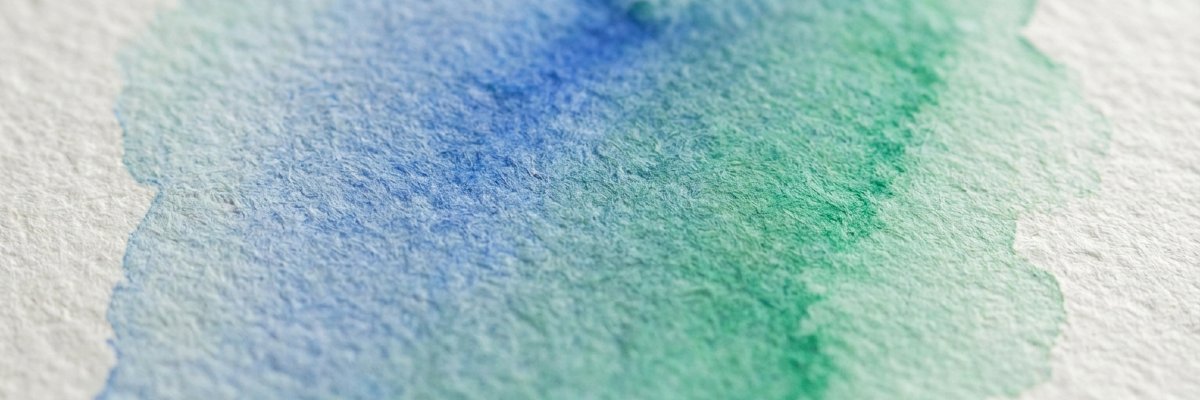
Paper selection in watercolor is just as important as the paint itself. Choosing the right weight and surface texture — cold press, hot press, rough — directly affects your results.
Why is Paper Selection So Important?
Most beginners focus on the brush and paint, neglecting the paper. Experienced watercolorists, however, say the opposite: paper is everything.
The wrong paper will wrinkle when it absorbs water, the brush will get stuck on the surface, the paint won't spread evenly, and techniques won't work as expected. The student won't be satisfied with the result — but often won't realize that the source of the problem is the paper. In her workshop, Şirvan Hoca has observed this situation repeatedly: a student who applies the technique correctly but uses the wrong paper will see a dramatic difference the moment they change their paper. This guide covers watercolor paper in detail — weight, texture, format, and brand selection. Once you learn the right paper, you won't make the wrong choice again.
Weight: Why is 300g necessary?
Paper weight refers to the weight of one square meter of paper. In watercolor, weight is very critical — because in watercolor work, the paper absorbs a lot of water, and this water swells and ripples the paper.
200g and Below — Avoid
Thin papers ripple noticeably when they absorb water. The paint doesn't spread evenly, the brush gets stuck on the surface, and the paper doesn't stay stable throughout the work. No matter how correctly the technique is applied, the result is disappointing. These papers are not made for watercolor.
300g — Ideal for Beginners
300g paper carries the weight of the water and stays flat with minimal ripple. It is both economical and more than sufficient for learning technique. When purchased in watercolor block format, the ripple problem is almost completely eliminated.
640g and Above — Advanced
Very heavy papers hardly ripple even when wet. Ideal for large format works and multi-layered techniques. The price is high — it can be preferred after the technique has matured. The Right Size for Beginners
Şirvan Hoca does not recommend that beginners start with large paper. Sizes close to A4, such as 18×25 cm or 24×32 cm, teach mastery of small spaces. Brush control, water balance, and composition are much easier to grasp at this scale. Transitioning to larger paper comes naturally once the basic techniques are mastered.
Travel Notebook Sets: Watercolors for Travel
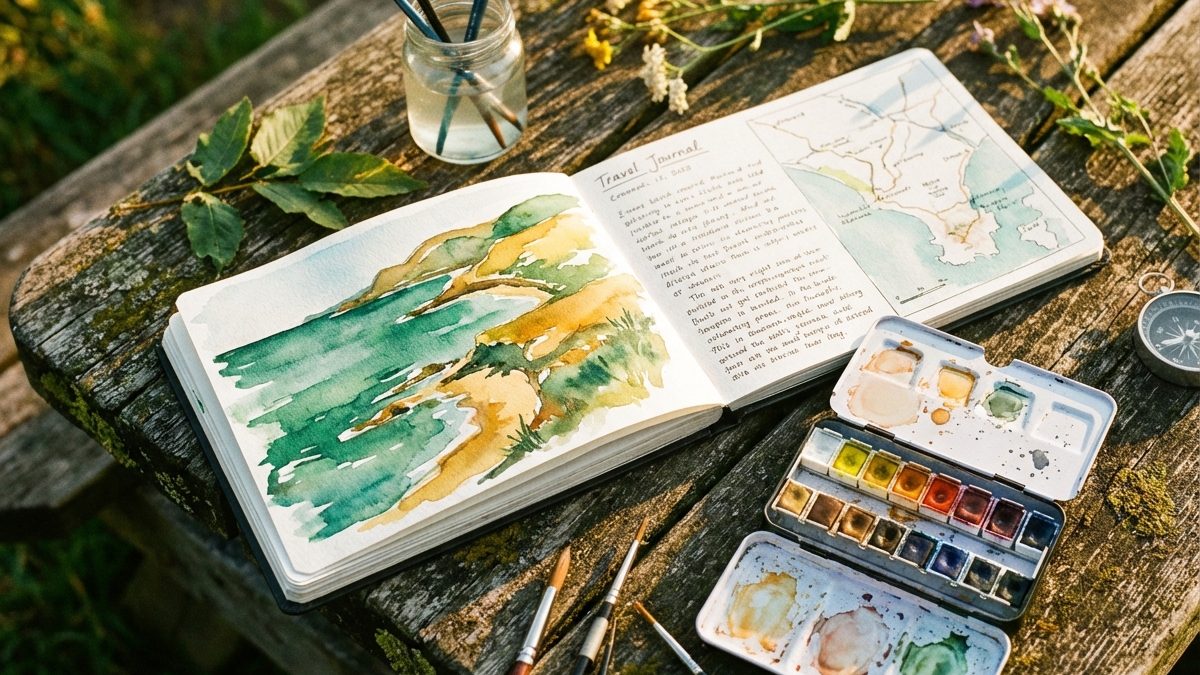
Travel notebooks are becoming increasingly popular among watercolorists — practical, portable, and ready to draw at any time. But choosing the right one is important. Most travel notebooks weigh 200g or less. While sufficient for sketches and color notes requiring light water use, fluctuations are inevitable in techniques that use a lot of water. That's why Şirvan Hoca doesn't recommend travel notebooks for beginners and those learning techniques — but emphasizes that once the technique is established, they are an indispensable format for travel and drawing outdoors.
Things to consider when choosing a travel notebook:
Prefer models with a weight of 300g. Hahnemühle Watercolour Book and Fabriano Watercolour Travel Book are the most reliable names in this category. Spiral-bound models allow the pages to open flat — great convenience during painting. Şirvan Hoca's Upcoming Travel Notebook Course
Şirvan Hoca is planning to open a special course focusing on watercolor work with travel notebooks soon. Drawing outdoors, travel sketches, and quick color notes — stay tuned to be among the first to register for that course.
Cold Press: The First Choice for Beginners
Cold press paper is the most commonly used surface type by watercolorists. Its lightly textured surface is neither too smooth nor too rough — it adapts to every technique and caters to all levels. It is almost always the first choice for beginners. Why is it so popular?
The cold press surface absorbs paint and water evenly. It gives consistent results in all techniques: flat wash, wet-on-wet, and dry brush. Its light texture leaves beautiful broken lines in dry brushing while not hindering smooth transitions in wet-on-wet. This versatility makes it a reliable friend of the watercolorist. Recommended Brands for Beginners
Şirvan Hoca prefers economical but reliable papers during the learning process. Canson Montval 300g Cold Press is ideal for this stage — it is both affordable and offers sufficient quality for learning watercolor techniques. Experimentation can be done freely without the pressure of using expensive paper, and learning can be done from mistakes. For Advanced Levels
When the technique matures, switching to 100% cotton cold press papers makes a big difference. Arches 300g Cold Press is the most reliable name in this category — it absorbs water perfectly, keeps colors vibrant, and retains its shape even when wet.
Hot Press: Smooth Surface, Sharp Details
Hot press paper has a completely smooth surface. Because it passes through hot rollers during printing, the surface tightens and the texture almost disappears. This feature makes it a completely different experience from cold press. When to Use It?
It is ideal for botanical illustration, portraiture, architectural drawing, and work requiring very fine detail. The smooth surface allows fine brushstrokes to be transferred precisely to the paper — while the slight texture of cold press can sometimes be an obstacle in detailed work, this is not the case with hot press. Things to Consider
Hot press paper absorbs water very quickly and the paint dries quickly — this makes the wet-on-wet technique more difficult. Smooth transitions and organic color flows are not as easily achieved as with cold press. Also, brush strokes and mistakes are more visible — it is not a forgiving surface. Suitable for Beginners?
Professor Şirvan does not recommend hot press paper for beginners. It is necessary to first master the basic techniques with cold press and learn water control. Switching to hot press becomes much more meaningful with a certain technical maturity — at that point, you can fully appreciate the possibilities offered by the smooth surface.
Rough Surface: The Natural Ground for Expressive Works
Rough paper has the most distinct texture of the three surface types. No pressure is applied during production — the paper dries naturally, creating a distinct texture on the surface. This texture becomes both a tool and a character in watercolor painting. When to Use It?
It is ideal for expressive, free, and nature-focused work. In dry brush technique, rough surface creates magnificent broken marks and textures — it is perfect for bringing to life surfaces such as rock, tree bark, wavy sea, and dry grass. Broad brushstrokes and free compositions stand out much more strongly on this surface. Rough with Wet-on-Wet
Wet techniques also yield beautiful results on rough surface — the paint settles into the recesses of the surface, and the granulation effect is much more pronounced. Combining rough paper with mineral pigment paints produces extremely rich textures. Suitable for Beginners?
Professor Şirvan does not recommend rough paper for beginners. The distinct texture makes brush control difficult and can be confusing during the technical learning process. After establishing a foundation with cold press, exploring rough surface becomes a much more efficient and enjoyable experience.
Block, Sheet, or Notebook?
Chapter 7 — text
Title: Block, Sheet, or Notebook?
Watercolor paper is sold in different formats. Each format has its own advantages and uses — choosing the right format directly affects the working experience.
Watercolor Block
It is a stack of paper with all edges glued and mounted on a hard surface. The paper does not curl when wet because it is held by the edges. After painting, the top paper is separated from the block with a dry spatula or knife. It is the most practical and recommended format for beginners — it does not require extra substrate or tape, it is ready to use immediately.
Single Sheet
Ideal for large-sized works and those who prefer large formats. However, single-sheet paper curls when wet — it must be secured to a wooden or hard surface with masking tape. This preparation process takes some time, but it is worth the freedom that working in a large format brings.
Spiral Notebook
The pages are kept together in spiral-bound notebooks. It is easy to carry, practical for sketching and quick work. Attention should be paid to the grammage — 300g spiral watercolor notebooks should be preferred, thinner sketchbooks should be avoided. Roll of Paper
Used for very large format works. It is cut to the desired size and taped to the surface. Suitable for advanced and large format artists. Recommendation for Beginners
Professor Şirvan recommends that beginners start with a 300g cold press watercolor block. Its practicality, prevention of waviness, and readiness for immediate use provide great convenience in the initial stages.
Frequently Asked Questions About Watercolor Paper
What is the difference between cotton paper and cellulose paper?
Cellulose papers are wood pulp based — economical, sufficient for beginners, but have lower water absorption capacity and color vibrancy compared to cotton paper. Cotton papers, on the other hand, are made from 100% cotton fibers, absorb water much more evenly, keep colors vibrant, and largely retain their shape even when wet. Canson Montval is cellulose-based, while Arches is 100% cotton-based — once you feel the difference, it's hard to go back.
Are the front and back of the paper the same?
No. Both sides of watercolor paper can be used, but the texture is different. Usually, the rougher side is considered the front. In blocks and notebooks, the correct side is already placed facing outwards.
Is it necessary to pre-wet the paper?
In large format works and techniques that use a lot of water, pre-wetting the paper and stretching it on the surface completely prevents warping. If you are using block paper, this step is not necessary. How should unused paper be stored?
It should be stored on a flat surface away from direct sunlight, moisture, and dust. To prevent the paper from yellowing over time, it can be wrapped in acid-free file or wrapping paper.
What can I do if I started with the wrong paper?
If you are using thin paper, secure it tightly to a wooden surface with masking tape along each edge, moisten the entire surface with a damp sponge before working, and let it dry. This method significantly reduces warping but is not a substitute for 300g paper.
Suggested Papers
Our recommended watercolor papers and notebooks will be here soon!
You've chosen your paper, now start painting!
Choose your paper, make your first brushstroke.
We've compiled all the papers recommended by Professor Şirvan on a single page. You can explore all options, from beginner to advanced levels, from cold press to travel notebooks.